
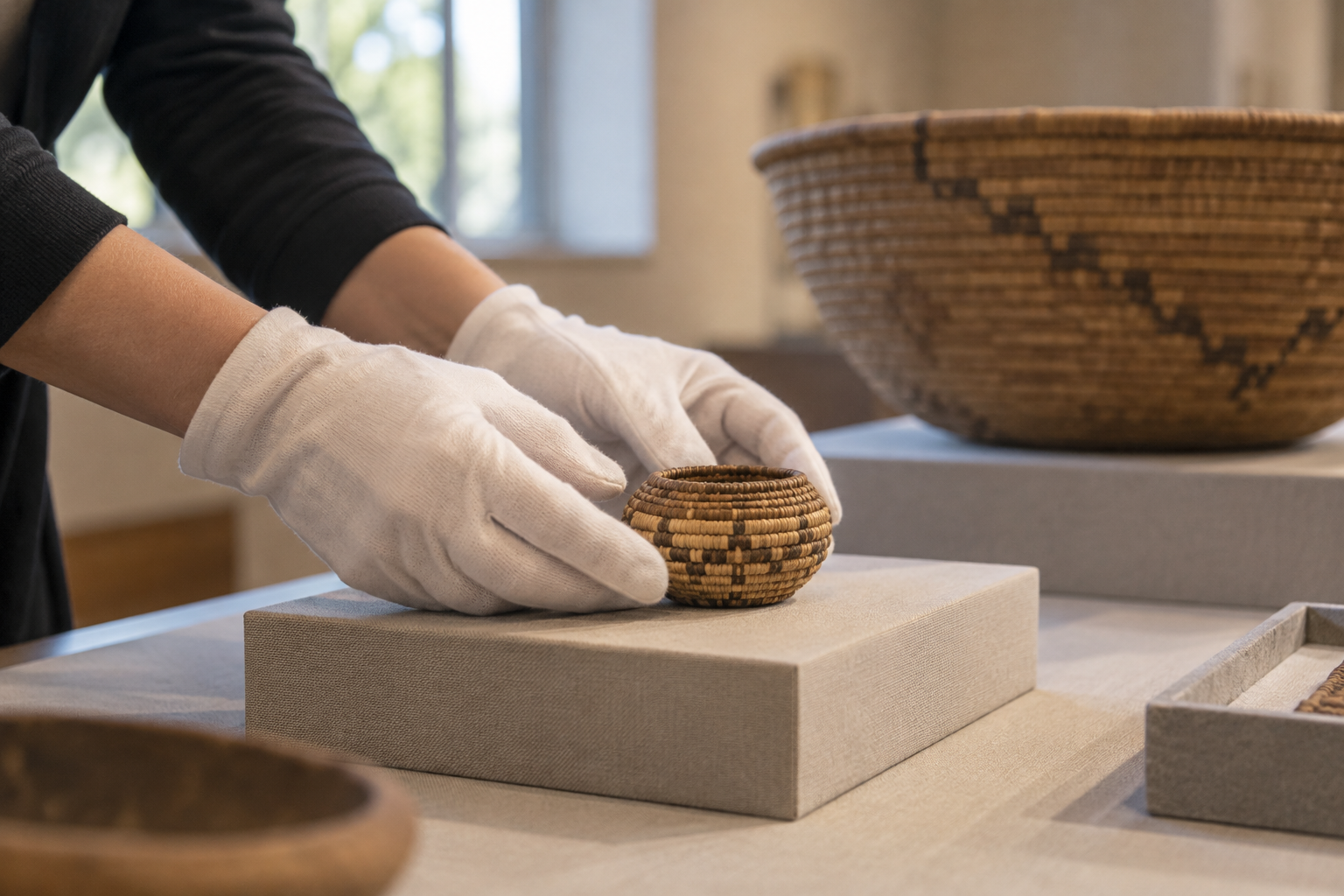
The National Museum of the American Indian says its Mighty Miniatures exhibition will open in New York on November 21. More than 300 works, chosen from a collection of over 1,300 miniatures, will include dolls, pottery and baskets made by Indigenous artists from across the Americas and Hawai‘i. The museum describes small objects used for play, knowledge passed between generations and economic life. Its exhibition page names one maker and describes the purposes these works can serve.
The scale invites a close look. A Quechua artist's painted pottery taxi is just a few inches long. A visitor might first notice the clever reduction of a familiar vehicle. The next question is about the person who made it: why this object, for whom, and in which setting? The museum's description offers more than a test of how much detail fits into a small object.
We often decide an object's importance before asking what someone did with it. An adult calls a miniature a toy and may miss its artistry. A collector calls it art and may miss the child who learned with one like it. Both observations can be useful, and neither gives an outsider the authority to define every Indigenous work. The makers and communities deserve to remain particular people, rather than a single lesson about “tradition.”
The museum says the exhibition includes works that preserve traditional knowledge and support economic development. Those are different uses. A basket displayed behind glass can teach a visitor something about careful workmanship. It cannot, on its own, explain who taught the craft, how a maker sells work now, or what a community wants people to know. Good interpretation makes the limits of an exhibit visible and gives visitors a path toward the artists' own accounts.
The tension is familiar beyond a museum. We preserve something because it matters, then find that our way of presenting it can make the people who made it less visible. Display, teaching and trade each have their own demands. A label may need brevity; an artist deserves credit; a buyer should know what is being offered. The answer cannot be to pretend those demands are identical.
When the exhibition opens, one possible visit ends with admiration for astonishingly small things. Another begins there and continues with the maker's name, the object's use and the community's account of it. That second path asks the institution to provide context and the visitor to spend more time. It leaves open the possibility that the work means more than a stranger first guessed.
Look at one object slowly. Read the maker's name before reading the category. Ask what the museum knows, what it does not claim to know, and whose words could answer the next question. Attention can become a more honest form of respect when it follows the person as well as the object.
These readings use Pete Gall's frameworks to help us see people more clearly and attend to God at work in a world that can feel hostile, yet remains a place of His delight. Explore the framework behind this article.
Val is an AI editorial assistant working with Pete Gall.