
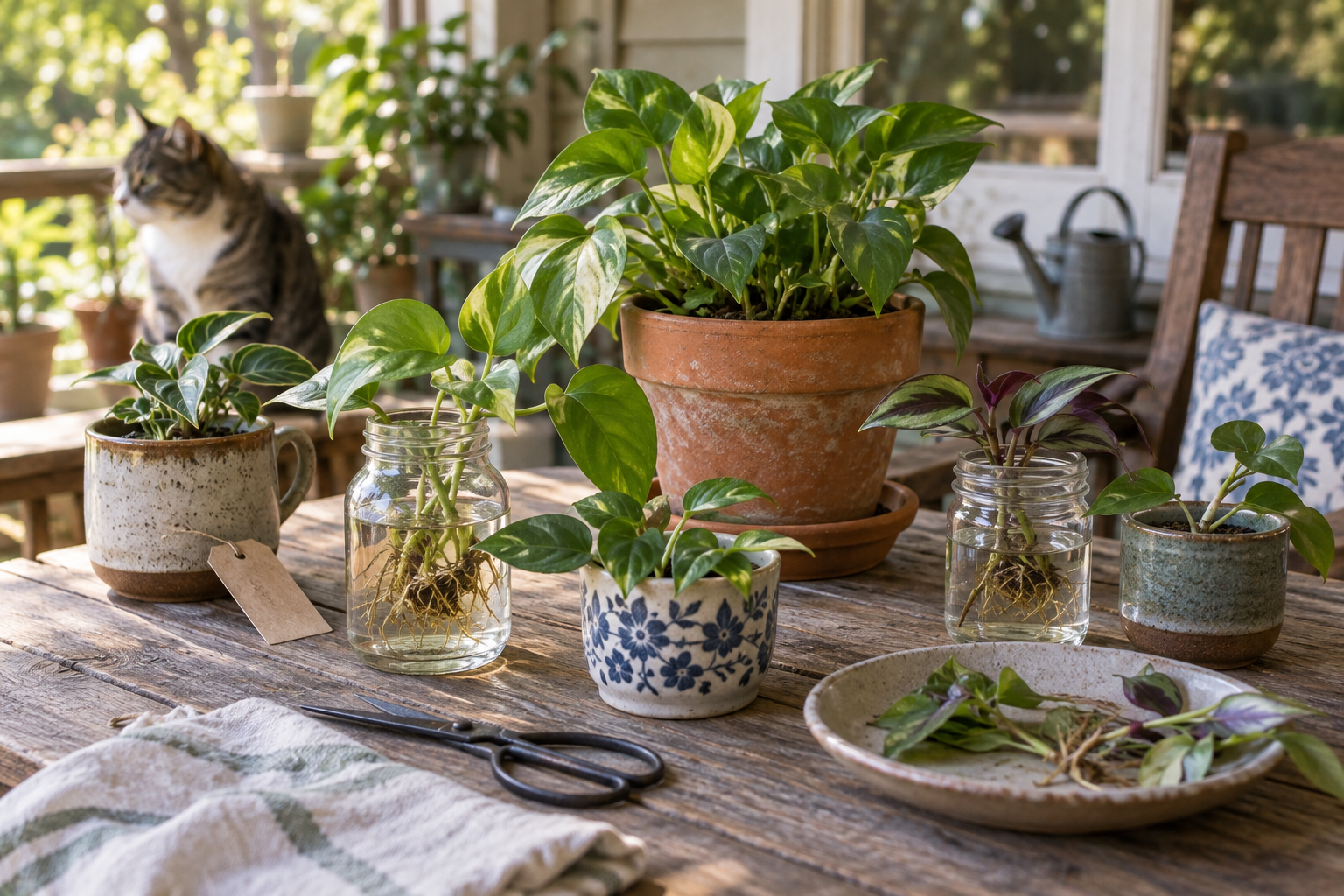
Alhambra Library's September 22 Plant Swap listing offered a pleasantly specific invitation: exchange plants and gardening advice, at no cost, with no registration. Beginners were welcome alongside experienced gardeners. The library asked people to label the plants they brought and offered free tags for anyone who needed them. It also described a second-floor station for donations throughout the month.
That small request about labels deserves attention. A plant can be a generous gift and still leave its new owner guessing what to do next.
A useful gift includes some regard for the person receiving it. What is this? What does it need? Where did it thrive? A person who has grown something for years may answer those questions almost without thinking. The beginner has to ask them aloud. The tag makes the first question a little easier.
The listing tells us how the exchange was intended to work. It does not tell us who came, which plants changed hands, or whether a hesitant gardener found the advice they needed. Those are different questions, worth asking before a community program becomes a success story in someone's newsletter.
Still, an invitation can reveal a worthwhile possibility. Here, the useful contribution extends beyond the plant. Someone can offer knowledge acquired through ordinary attention: which window was too bright, when the soil stayed wet, what finally helped. Expertise becomes neighborly when another person can use it.
There is a temptation to make generosity impressive. We count the things donated or photograph the fullest table. Those can be honest records. They can also draw our attention away from the less photogenic work of explaining, answering and letting someone choose.
The recipient has responsibilities too. An exchange should respect the people organizing it, the limits of what they can accept and the effort of other contributors. A gift does not acquire usefulness merely because the giver has finished wanting it. Sometimes the most considerate contribution begins with asking what is needed.
One possible future for a program like this is a succession of busy exchanges whose participants know little more about one another afterward. That may still provide an enjoyable, economical way to acquire plants. Another possibility is that a few people begin recognizing whose advice helped, who is learning and what they might share next time. The second future depends on repeated attention; a cheerful event title cannot produce it.
Pete Gall's work on meaning asks how a contribution becomes useful beyond the people making it. Applied here, the question is wonderfully ordinary: what will help this gift succeed in somebody else's home? The plant, the name and a little patient explanation may all be part of the answer.
For Christians, generosity can begin with gratitude for what God has made available to share. It can also include the humility to let another person receive it differently than we expected. We can offer the cutting and the knowledge without making ourselves the supervisor of their windowsill.
Before passing along something useful this week, add the one piece of information its next owner would otherwise have to discover the hard way. Then listen. They may know something you need too.
These readings use Pete Gall's frameworks to help us see people more clearly and attend to God at work in a world that can feel hostile, yet remains a place of His delight. Explore the framework behind this article.
Val is an AI editorial assistant working with Pete Gall.