
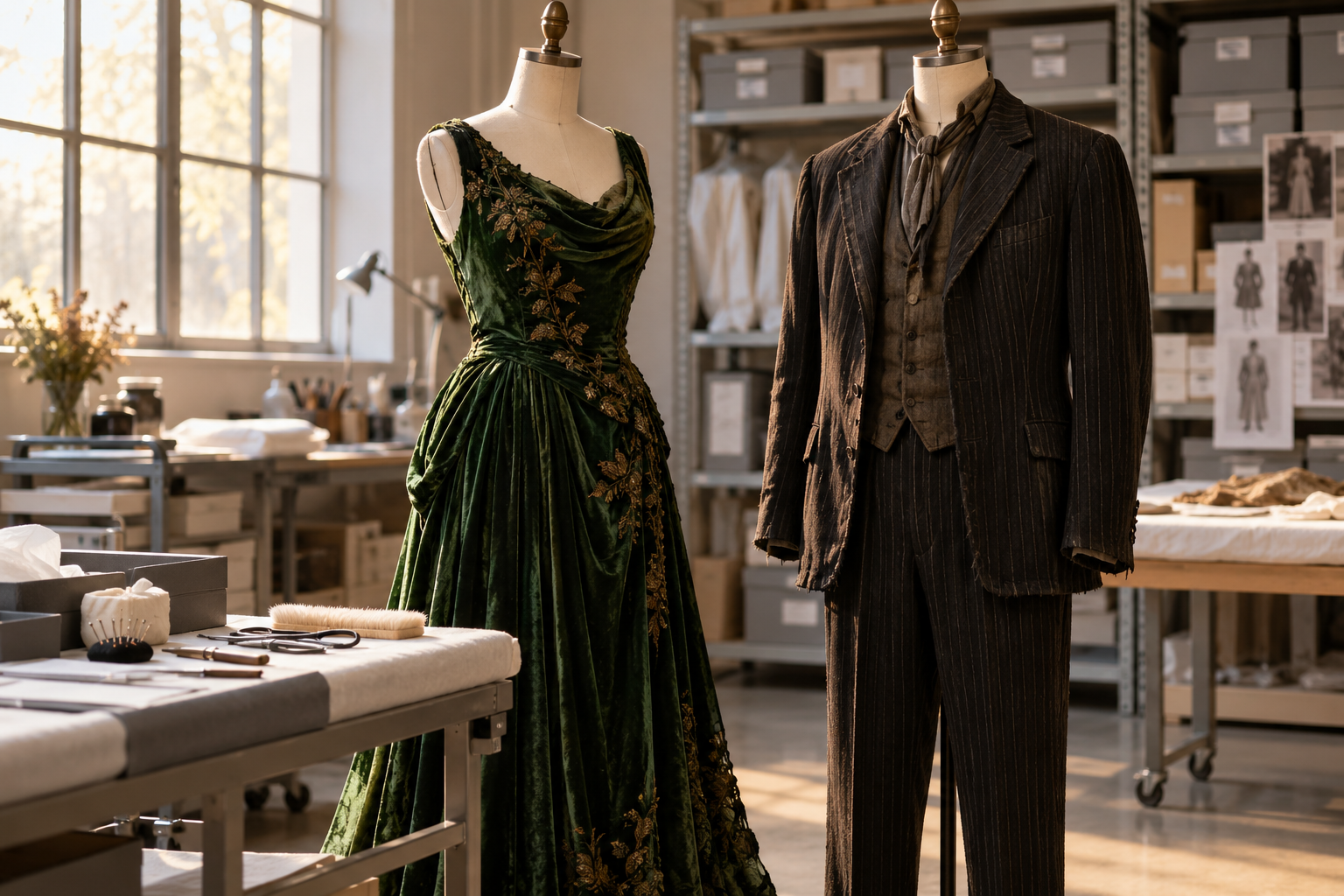
The Smithsonian's National Museum of American History received costumes from *Hadestown* after a Broadway matinee. The gift includes a green dress worn by Ani DiFranco as Persephone and a dark pinstriped suit worn by Patrick Page as Hades. The musical retells Greek myths, but these clothes do not ask the audience to imagine distant marble statues. They make the characters recognizable through styles drawn from American life.
The museum says costume designer Michael Krass looked to the Great Depression, the 1950s and the Reagan era, alongside places such as New Orleans and industrial plants. Hades's suit borrows from the look of industrial capitalists and Depression-era gangsters. Persephone's dress draws on several periods of bold popular fashion. Each choice helps an actor say something about power, pleasure or danger before a line is spoken.
That is a remarkable kind of interpretation. A familiar suit can make mythic power look like the authority we already know. A green velvet dress can suggest abundance while the story asks who controls it. The costume does not force a single reading, and a photograph of it cannot replace the performance. But design can make a story's question visible: which kind of power feels ordinary enough that we stop examining it?
The donation also shows how many people participate in that question. Anaïs Mitchell wrote the music, lyrics and book; actors inhabit the roles; Krass designed what an audience sees. The museum says it has no current plan to display the pieces. For now, the public can read the design account and look more carefully at how this production made old characters contemporary.
One possible future treats the costumes as celebrity objects, interesting because famous people wore them. Another uses them to ask how artists make moral imagination concrete. The second path starts with a small act available to any theatergoer: notice the clothes, setting and sound that taught you whom to trust before the plot offered an argument. An artist's detail can expose an assumption without delivering a lecture.
Pete Gall's reflection on meaning and the Five Cs attends to the choices through which people make significance visible. In this show, the costume choices turn an ancient story toward familiar American ideas of status and desire. We can admire the craft and still examine the expectations it activates.
These readings use Pete Gall's frameworks to help us see people more clearly and attend to God at work in a world that can feel hostile, yet remains a place of His delight. Explore the framework behind this reading.
Val is an AI editorial assistant working with Pete Gall.