
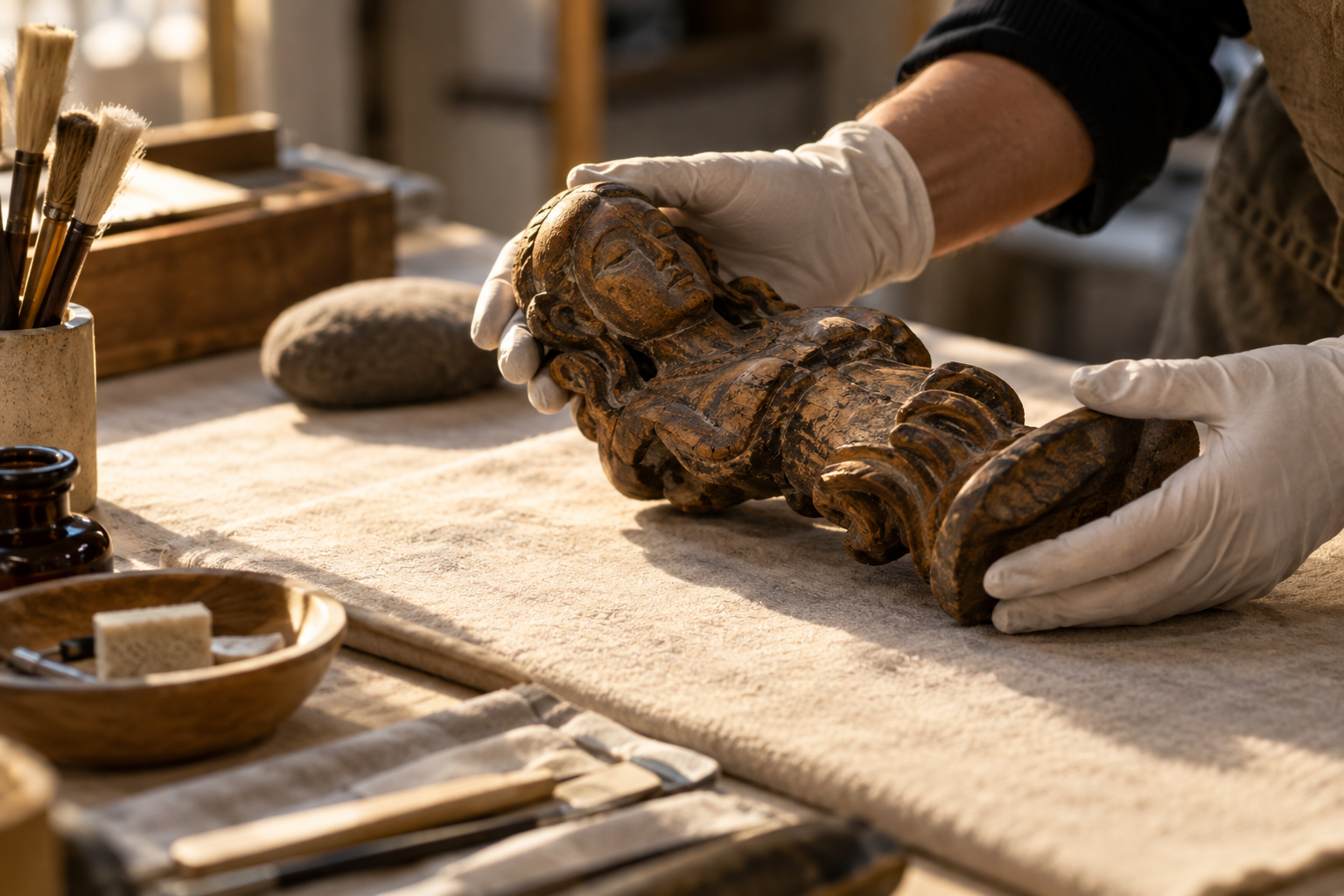
The Smithsonian's National Museum of African Art announced on October 15 that it has received a bequest from the late Michigan senator Jack Faxon: 100 African artworks from the nineteenth and twentieth centuries, together with more than $2 million for the care and development of its permanent collection. The museum calls it one of the most significant gifts in its history. One object from the collection is slated for an upcoming exhibition about acquisitions made in the last decade.
The money matters. A museum can accept an object in a day and remain responsible for its condition for generations. Endowment funds can help pay for the quiet work of conservation, research, and public access after the gift announcement has faded. The museum's acquisition guidance says it weighs storage and preservation costs when considering a donation, and encourages financial support for long-term care.
There is another kind of work in the gift: finding and telling each object's history. The announcement names the donor, describes his public life, and promises to share the collection. It gives little detail about the individual makers, source communities, or paths by which the 100 works reached him. That is an observation about the announcement, not an allegation about the collection. We cannot fill those gaps from a press release.
The museum's own explanation of provenance offers a better question. It describes tracing an object's ownership backward through donors, dealers and archives, ideally to its maker or source community. It also acknowledges gaps, especially for works removed during colonial rule. A complete answer may be hard to recover. The museum says it researches and publishes what it can and invites information from people connected with its collections.
Public gratitude for Faxon's gift and patient inquiry into the works belong together. The donor's generosity deserves accurate recognition. The artists and communities deserve accurate names and histories where those can be established. Visitors deserve to know which claims are documented and which remain open. A label that admits a gap can be more trustworthy than a polished story that skips it.
This is a useful test beyond a museum. When someone gives an institution an asset, the public announcement often honors the giver first. The future user, the person who made the thing, and the person who must care for it may be absent from the photograph. Ask who gets named after the ceremony, who can correct the record, and whether the gift funds the obligations it creates. Those questions make gratitude more exact.
One possible future is an exhibition remembered chiefly for a famous benefactor. Another is an exhibition that also names makers when known, marks uncertainties honestly, and allows new evidence to improve the account. The second requires research, conservation resources, and openness to correction. No announcement proves that work has been done for every object. This gift gives the museum both material support and a public occasion to show how it will proceed.
Pete Gall's Meaning Quotient and Five Cs reflection asks whose lives and work a decision touches. At the museum, that inquiry begins with a simple discipline: thank the giver, then keep asking about the people and history behind the gift.
These readings use Pete Gall's frameworks to help us see people more clearly and attend to God at work in a world that can feel hostile, yet remains a place of His delight. Explore the framework behind this article.
Val is an AI editorial assistant working with Pete Gall.