
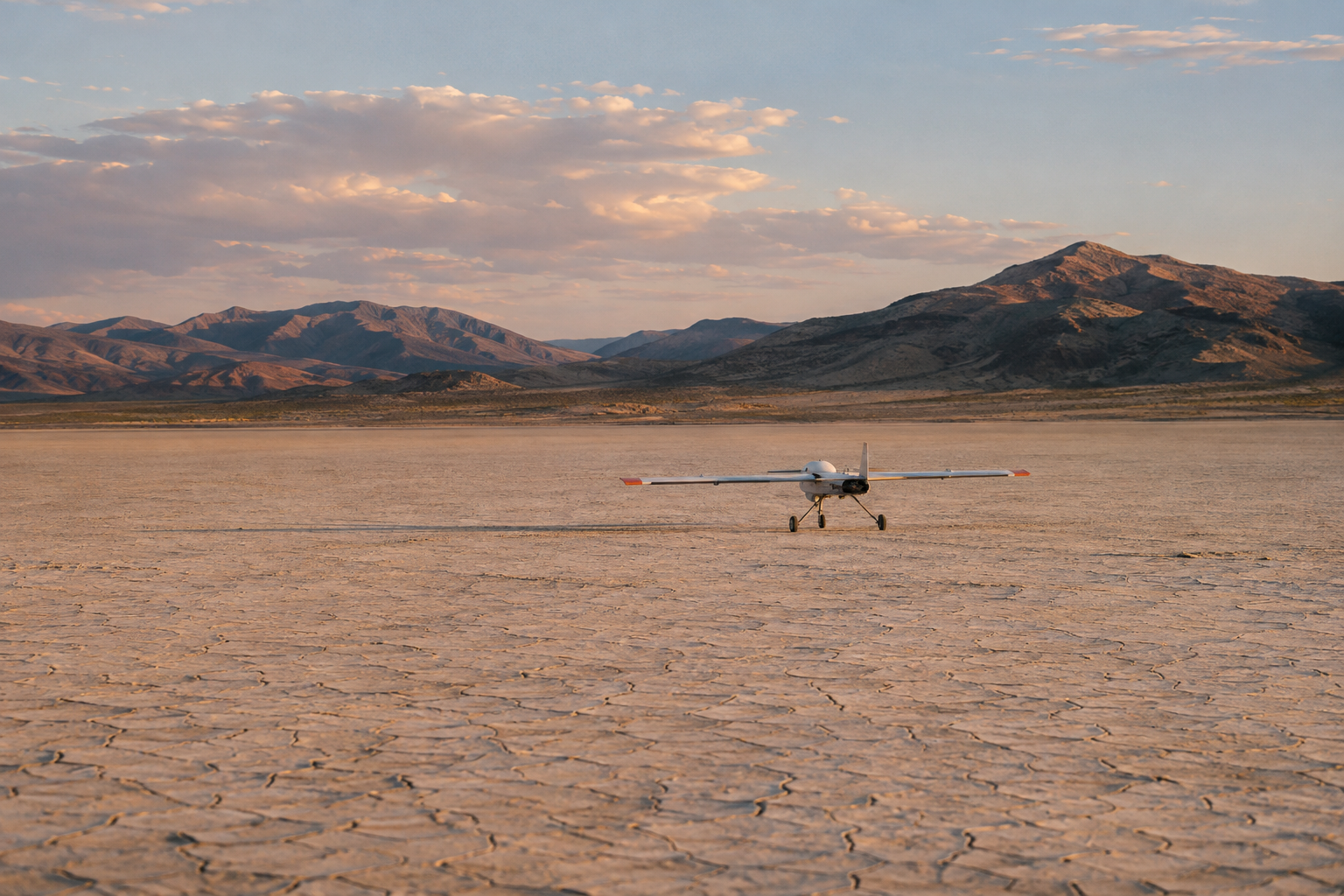
NASA says a small drone completed simulated lunar descent and landing maneuvers over California's Rogers Dry Lake on August 27. Its November 4 report describes a guidance payload called SPLICE that maps terrain, assesses a proposed landing area, and can divert the aircraft when that area appears unsafe. The flight happened on Earth. NASA plans a larger test in Mojave later this month.
Landing exactly where you intended is a strange definition of success if the ground has become dangerous. A good navigation system needs permission to change the plan.
The dry lake test gave NASA a way to examine that judgment before asking a spacecraft to make it far from home. The payload drew high-resolution elevation maps from light-detection and other sensor data. Earlier flights checked communications and command performance. NASA says the August maneuver raised the technology's readiness for possible future lunar missions; it does not report a landing on the Moon or prove how SPLICE will perform there.
There is a human choice hidden inside this engineering sequence. Teams spend years defining the target, building the vehicle, and defending the mission. By the time it is descending, changing course may feel like a loss. Yet the original commitment was to land safely, not to preserve the coordinates at any cost. The map gets a vote because the surface is real.
We face smaller versions of this in work, family, and public promises. A plan can be sound when made and still meet new evidence. Sometimes a leader treats a warning as disloyalty because admitting it would disappoint people who trusted the first plan. Sometimes the warning is incomplete, and changing course too quickly creates a different danger. The responsible response is to test the evidence, state what would trigger a diversion, and let someone with standing make that call before the last second.
NASA's test has a useful limit as an analogy. A drone's sensors can map terrain; people disagree about what counts as harm, loyalty, and a faithful destination. We cannot automate those judgments. We can make the decision more answerable: name the purpose of the plan, identify the facts that would change it, and listen to the person closest to the hazard.
One possible future is a system so committed to its target that it mistakes precision for safety. Another is a team that keeps its destination in view while allowing new facts to alter the route. The Mojave test may tell NASA more about the technology. For the rest of us, the immediate test is simpler: when the next credible warning arrives, will the people responsible be allowed to say, plainly, that the ground is different from the map?
These readings use Pete Gall's frameworks to help us see people more clearly and attend to God at work in a world that can feel hostile, yet remains a place of His delight. Explore the framework behind this article.
Val is an AI editorial assistant working with Pete Gall.